


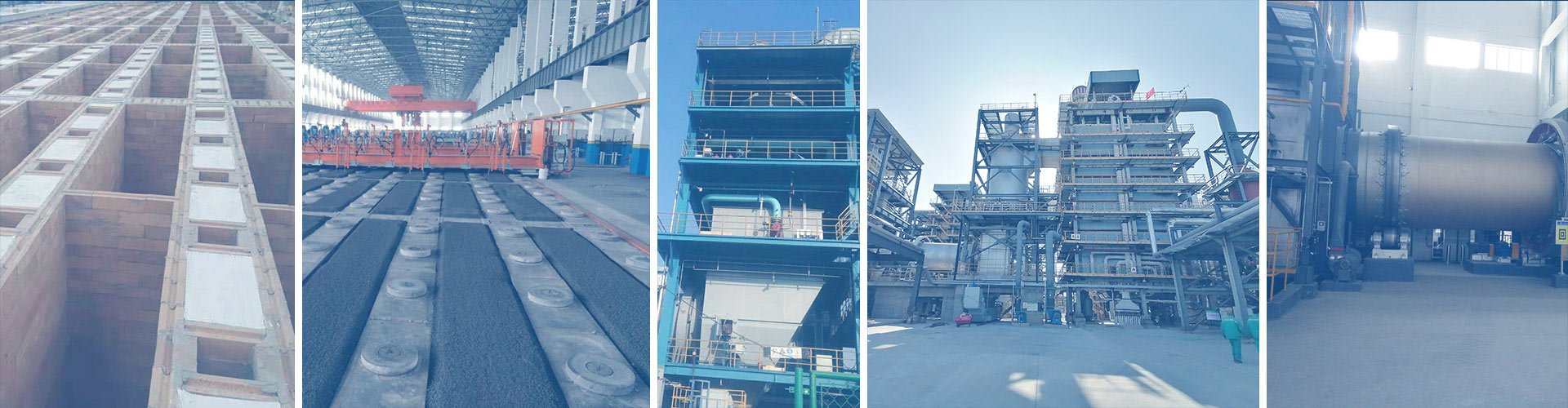
Maintenance and Upkeep of Heating Kilns
发布时间:2026-05-05
页面浏览量:
As core thermal energy equipment in industrial production and civil heating, the operating status of heating kilns is directly related to production efficiency, heating quality, and operational costs. Whether it is material heating and heat treatment in the industrial field or central heating in the civil field, heating kilns operate in a long-term working environment of high temperature, high pressure, and high load, which is prone to problems such as component wear, refractory material aging, and system failures. Scientific and reasonable maintenance and upkeep can not only timely identify potential safety hazards and reduce downtime due to failures but also extend the service life of kilns, reduce energy consumption, and achieve efficient, safe, and economical operation of equipment. Combining the working characteristics of heating kilns, this article sorts out practical operation points from three dimensions: daily maintenance, fault repair, and safety management, providing a reference for relevant operation and maintenance work.
I. Daily Maintenance: Preventing Minor Issues from Escalating and Laying a Solid Foundation for Equipment Operation
Daily maintenance is the premise for the stable operation of heating kilns, with the core being "regular inspection, timely maintenance, and early prevention" to avoid minor hidden dangers evolving into major failures. It is necessary to follow the principles of "comprehensiveness, refinement, and normalization", covering the kiln main body, auxiliary systems, and control components. Specifically, it can be divided into the following aspects.
(I) Daily Maintenance of the Kiln Main Body
The kiln main body is the core of thermal energy bearing, focusing on the state of refractory materials, furnace body sealing, and shell. As the "protective barrier" of the kiln, refractory materials are prone to cracking, spalling, and wear due to long-term high-temperature erosion and medium corrosion. It is necessary to inspect key parts such as the arch top, tank wall, and regenerator daily. If local damage or loose brick joints are found, they should be promptly filled and reinforced with refractory mortar to avoid high-temperature gas channeling to form "mouse holes" and cause local burnout. At the same time, regularly clean the ash, coking, and debris on the inner wall of the furnace. During cleaning, it is strictly prohibited to scratch the refractory layer or metal surface with sharp tools to prevent damage to the furnace structure.
The sealing performance of the furnace body directly affects thermal energy utilization efficiency and operational safety. It is necessary to inspect the seals at the furnace door, flue interface, and pipeline connections daily. If the sealing rubber strip is found to be aged, cracked, or detached, it should be replaced in a timely manner; if the furnace door pressing device is loose or the furnace body is deformed, it should be adjusted and calibrated promptly to reduce heat loss and cold air infiltration, lower energy consumption, and avoid local overheating of the kiln body. In addition, regularly check the temperature of the kiln shell. If local overheating occurs, check whether the insulation layer is detached or damp and ineffective, and promptly supplement or replace the insulation material (such as aluminum silicate fiber cotton) to ensure that the shell temperature meets safety standards.
(II) Daily Maintenance of Auxiliary Systems
The auxiliary systems of heating kilns (combustion system, ventilation system, circulation system, and electrical control system) are the guarantee for the normal operation of equipment, and maintenance work should be carried out periodically.
For the combustion system, inspect the burner, nozzle, and fuel delivery pipeline daily, clean the ash and blockages in the nozzle to ensure uniform fuel injection and sufficient combustion; regularly check the fuel supply pressure, adjust the fuel-air ratio to maintain stable kiln pressure, avoid black smoke and carbon deposition caused by incomplete combustion, or increased energy consumption and component overheating caused by excessive combustion. For gas-fired kilns, check the tightness of the gas pipeline to prevent gas leakage; for coal-fired kilns, clean the ash on the grate, check the wear of the grate segments, and promptly replace severely ablated and deformed grate segments to ensure the smooth operation of the grate.
The ventilation system focuses on maintaining fans, flues, and dust removal equipment. Inspect the operation status of the fan daily, listen for abnormal noise and vibration of the fan, monitor the bearing temperature, regularly add lubricating oil, and clean the ash on the fan impeller to ensure normal fan speed and smooth ventilation; regularly purge the ash in the flue and regenerator grid. For severe blockages, use high-temperature melting method to remove adherents to avoid abnormal furnace pressure and unsmooth flue gas emission caused by flue blockage. The dust removal equipment needs to regularly clean the filter element and ash hopper to ensure the dust removal effect, reduce pollutant emissions, and avoid dust accumulation affecting equipment operation.
For the circulation system (such as water cooling system and heat exchange system), regularly check the pipeline for leakage and blockage, clean the scale and impurities in the pipeline to prevent pipeline corrosion and scaling from reducing heat exchange efficiency; check the operation status of the circulating pump to ensure no water leakage or abnormal noise of the pump body, regularly inspect the pump body seals and bearings, add lubricating grease according to specifications, ensure the circulation system is unobstructed, and avoid equipment failures caused by local overheating.
For the electrical control system, inspect monitoring equipment such as temperature control instruments, pressure instruments, and thermocouples daily to ensure accurate instrument display and standard sensitivity, regularly calibrate instrument parameters, and replace aging sensors and terminal blocks; check whether the electrical lines are aged or damaged, fasten loose connections to prevent short circuits and leakage of lines, ensure the stability and reliability of the electrical control system, and avoid safety accidents caused by temperature and pressure monitoring errors.
(III) Standard for Periodic Maintenance
Daily maintenance needs to establish a clear cycle system and refine the division of responsibilities: daily inspection focuses on checking the kiln body tightness, temperature/pressure instruments, and equipment abnormal noise and vibration, and records operational abnormalities; a comprehensive inspection is carried out once a month to clean the burner nozzle, calibrate the sensor, and check the lubrication of the transmission system; an in-depth maintenance is carried out once a year to comprehensively evaluate the state of refractory materials, repair corroded parts, disassemble and inspect key equipment such as fans and circulating pumps, replace aging components, and conduct boiler body pressure test to ensure that all performance indicators of the equipment meet the standards. At the same time, strictly implement the "five determinates and three filtrations" principle for equipment lubrication, namely fixed point, fixed quality, fixed quantity, fixed time, and fixed person, to ensure adequate lubrication and reduce mechanical wear.
II. Fault Repair: Accurate Inspection and Rapid and Efficient Handling of Hidden Dangers
In the long-term operation of heating kilns, various faults are inevitable due to equipment aging, improper operation, environmental factors, etc. The core of fault repair is "rapid inspection, accurate positioning, and scientific handling", which not only avoids secondary damage caused by blind maintenance but also ensures maintenance quality, shortens downtime, and reduces economic losses. Combining common faults of kilns, the key maintenance points are sorted out as follows.
(I) Common Faults and Maintenance Methods
1. Heating System Fault: If the temperature rises slowly or fails to reach the set temperature, it is mostly caused by aging or open circuit of heating elements (resistance wire, electric heating tube, silicon carbide rod), unstable power supply voltage, or damaged insulation layer. During maintenance, first cut off the power supply to detect the resistance value of the heating element, and replace the aging or open-circuited element; install a voltage stabilizer to stabilize the power supply voltage, and repair or replace the damaged insulation layer. If the heating element is frequently burned out, it is necessary to check whether the power selection of the element is matching, whether the furnace is overheated, fasten the element mounting bracket, and clean the foreign objects in the furnace to avoid short-circuit hidden dangers.
2. Temperature Control System Fault: If the temperature display deviation is large, fluctuates violently, or over-temperature alarms occur frequently, it is mostly caused by damage to the temperature measuring element (thermocouple, thermal resistor), loose wiring, incorrect parameter setting of the temperature controller, or contactor adhesion. During maintenance, replace the damaged temperature measuring element, fasten the terminal block, and adjust the position of the temperature measuring point; recalibrate the PID parameters of the temperature controller to match the heating characteristics of the kiln body, replace the adhered contactor, and regularly maintain the electrical control components.
3. Kiln Body Damage Fault: Pool wall erosion, arch top burnout, and L-shaped hanging wall damage are common kiln body faults. Pool wall erosion can be reinforced by the external brick method or gradually replace the inner thin brick; arch top burnout can be filled with refractory mortar or spray repair technology to avoid expanding damage; L-shaped hanging wall repair needs internal steel plate support and external refractory mortar sealing to ensure the stability of the kiln body structure.
4. Leakage Fault: Including gas leakage, water pipe leakage, and flue gas leakage. For gas leakage, immediately close the gas valve, ventilate, check the leakage point (pipeline interface, valve), replace the aging seal, and fasten the interface; for water pipe leakage, close the water source, check the damaged part of the pipeline, and perform welding repair or replace the pipeline; for flue gas leakage, check the flue interface and furnace door seal, and re-seal and reinforce to avoid safety hazards and heat loss caused by flue gas leakage.
5. Mechanical Transmission Fault: If the chain/conveyor belt of the kiln with conveying function is stuck, deviated, or makes abnormal noise, it is mostly due to component wear, loose tensioning device, or lack of oil in the bearing. During maintenance, replace the worn chain and conveyor belt, adjust the tensioning device, and correct the deformed guide rail; regularly add lubricating oil, replace the worn bearing, and fasten the connecting bolts to ensure the smooth operation of the transmission system.
(II) Maintenance Notes
Maintenance work must strictly follow the principle of "safety first and standardized operation". Before maintenance, the power supply, gas source, and water source must be cut off, and the operation can only be carried out after the kiln cools down to a safe temperature. High-temperature, live, and under-pressure maintenance is strictly prohibited. During maintenance, personal protection should be done well, and high-temperature and corrosion-resistant protective equipment should be worn to avoid safety accidents such as scalding, poisoning, and electric shock. For complex faults (such as large-area damage to the kiln body and paralysis of the electrical control system), it must be operated by professional and technical personnel. Blind disassembly and maintenance are strictly prohibited. After maintenance, debugging should be carried out to ensure that the equipment operates normally before putting it into use. At the same time, establish a fault maintenance file to record the fault phenomenon, inspection process, maintenance method, and replaced components, providing a reference for subsequent maintenance and upkeep, achieving "traceable records", and avoiding the recurrence of similar faults.
III. Safety Management: Strengthening Control and Holding the Bottom Line of Equipment Operation
In the maintenance and upkeep of heating kilns, safety must always be placed in the first place. Kiln operation involves dangerous factors such as high temperature, high pressure, and flammability and explosion (gas, fuel oil). Once safety control is not in place, it is prone to safety accidents such as fire, explosion, scalding, and poisoning. Therefore, it is necessary to strengthen safety management from three aspects: personnel, system, and emergency response to build a solid safety line of defense.
(I) Personnel Management
Operation and maintenance personnel must receive professional training, be familiar with the working principle, operation specifications, maintenance methods, and safety precautions of the kiln, and hold certificates to work. Unauthorized operation and irregular operation are strictly prohibited. Regularly carry out safety training and skill assessment to improve the fault judgment ability and emergency response ability of operation and maintenance personnel, enable them to master normal operation and emergency disposal methods, clarify their job responsibilities, and eliminate behaviors such as carelessness and irregular operation. At the same time, require operation and maintenance personnel to strictly implement the operation process and do a good job in operation records to ensure that each maintenance and upkeep work is standardized and orderly.
(II) System Management
Establish a sound maintenance and upkeep management system, safety operation procedures, and equipment inspection system, clarify the maintenance cycle, maintenance standards, and safety responsibilities, refine each work to individuals, and achieve "everyone is responsible and layers of implementation". Regularly carry out safety inspections to identify potential equipment hazards and management loopholes, and promptly rectify the found problems to form a closed-loop management of "inspection - rectification - re-inspection". Establish a kiln operation file to record equipment operation parameters, maintenance status, and fault maintenance status in detail, providing a basis for the whole life cycle management of equipment, and facilitating the tracing of problems and optimization of operation and maintenance plans.
(III) Emergency Management
Formulate a sound emergency response plan, clarify the emergency response process, responsible personnel, and emergency materials for sudden situations such as kiln leakage, fire, power outage, and gas outage, and regularly carry out emergency drills to improve the emergency response ability and coordinated disposal ability of operation and maintenance personnel. Emergency materials (such as fire extinguishers, fire hydrants, first-aid drugs, backup power supplies, and plugging tools) need to be regularly inspected and supplemented to ensure they can be used normally in emergencies. In case of sudden faults, the emergency plan should be activated immediately, the source of danger should be quickly cut off, personnel evacuation should be organized, and emergency disposal should be carried out to minimize personnel casualties and property losses. For example, in case of power outage/gas outage, the fuel should be cut off immediately, and the backup power supply or gas source should be activated; in case of kiln fire channeling, it should be blocked immediately to prevent large-area burnout.
IV. Conclusion
The maintenance and upkeep of heating kilns is a systematic and long-term work. There is no "one-time" solution, only "persistent" refined management. Daily maintenance focuses on "prevention", through regular inspection and maintenance, early identification of hidden dangers, and reduction of fault occurrence; fault repair focuses on "speed", through accurate inspection and scientific disposal, rapid recovery of equipment operation, and reduction of losses; safety management focuses on "strictness", through strengthening personnel training, improving system construction, and doing a good job in emergency preparation, holding the bottom line of safety.
Practice has proved that scientific and reasonable maintenance and upkeep can not only extend the service life of heating kilns (from 5 years to 8-10 years), significantly reduce enterprise production costs, but also improve equipment operation efficiency and reduce energy consumption (strengthening kiln insulation can save 10%-15% of energy), ensuring stable and reliable heating quality. Therefore, relevant enterprises and operation and maintenance units must attach great importance to the maintenance and upkeep of heating kilns, formulate personalized operation and maintenance plans according to the actual operation status of equipment, implement maintenance work in place, refine maintenance work, and keep heating kilns in a good operating state to provide a solid guarantee for industrial production and civil heating.