


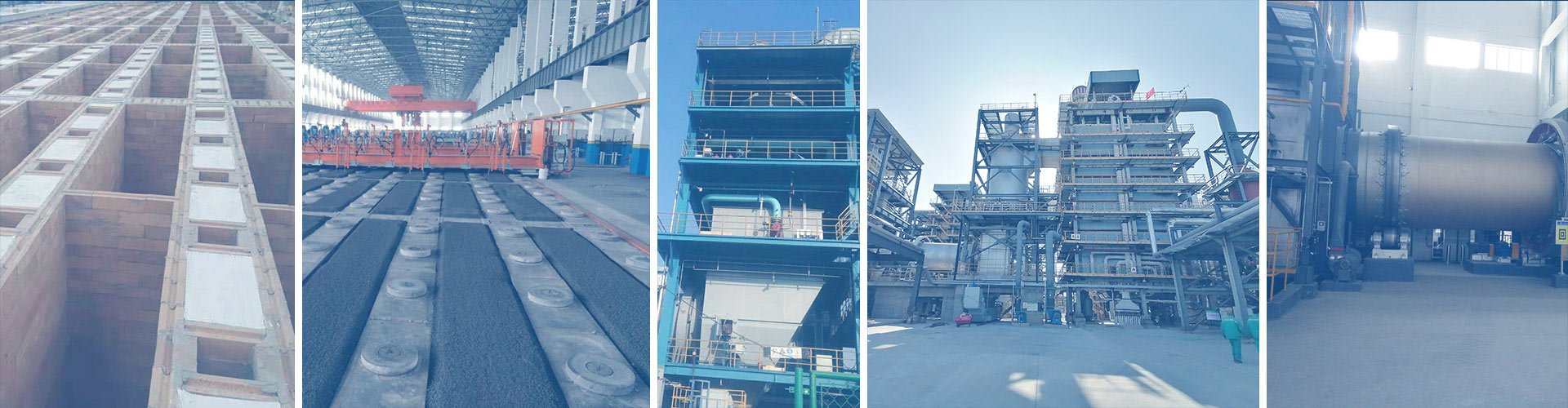
Castables: The Invisible Armor for High-Temperature Industry
发布时间:2026-05-03
页面浏览量:
In high-temperature industrial scenarios such as iron and steel smelting, cement sintering and chemical reactions, furnace temperatures soar to 1000-2000℃. Under the severe scouring of high-temperature molten materials and continuous corrosion of corrosive gas, ordinary materials soften and damage easily. As a core type of unshaped refractory materials, castables act as solid "invisible armor" against extreme working conditions. They build safe and durable protective barriers for industrial kilns and high-temperature equipment, serving as indispensable basic materials for modern high-temperature industry.
I. What Are Castables? Flowable Refractory Materials for On-Site Pouring
Castables are fluid slurry mixed with refractory aggregates, refractory powders, binders and admixtures in scientific proportions by adding water or special liquid. Without pre-firing, they can be directly formed on construction sites through pouring, vibration, tamping and other processes. After curing and baking, they solidify into an integral structure with high strength and temperature resistance.
Simply put, castables are the "industrial concrete" for high-temperature environments, yet with far superior performance. Ordinary concrete can only withstand 200-300℃, while castables stably resist temperatures up to 1500-2000℃ or even higher. Meanwhile, they feature excellent wear resistance, corrosion resistance and thermal shock resistance, perfectly adapting to various special-shaped kiln structures.
In terms of composition: refractory aggregates (such as bauxite, corundum and silicon carbide) form the structural framework and determine high-temperature resistance and wear resistance; refractory powders fill gaps to enhance density; binders (calcium aluminate cement, water glass, etc.) ensure hardening at room temperature and structural strength under high heat; admixtures optimize fluidity and construction performance.
II. Core Functions: Four Major Advantages to Solve Industrial Pain Points
The core purposes of castables are protecting high-temperature equipment, extending kiln service life, cutting energy consumption and ensuring production safety. Their values are reflected in four key aspects:
High-Temperature Resistance: Against Intense Heat Erosion
This is the most fundamental function of castables. Industrial kilns (blast furnaces, cement rotary kilns, glass melting furnaces, etc.) operate steadily at 1000-2000℃ all year round. Most furnace shells are made of steel, which softens and deforms above 500℃. As the inner lining, castables are in direct contact with high-temperature flames and materials, isolating heat transmission and stabilizing the overall structure of furnace shells to prevent equipment damage.
Erosion & Abrasion Resistance: Withstand Molten Media Corrosion
The scouring of molten steel and slag above 1600℃ in iron and steel smelting, corrosion of acid-base media in chemical production, and abrasion of flue gas and ash in waste incinerators are the main causes of equipment aging. High-grade castables (corundum-based, silicon carbide-based) effectively resist molten metal penetration, slag erosion and material abrasion, reducing lining peeling and lowering maintenance frequency.
Thermal Insulation: Reduce Energy Consumption & Improve Efficiency
Besides fire resistance, castables can also be used as thermal insulation layers. Uniform internal pores reduce heat loss and cut operation costs. Data shows that kilns equipped with high-performance insulating castables can increase thermal efficiency by 15%-20%, bringing long-term energy-saving benefits.
Flexible Construction: Adapt to Special Shapes & Rapid Maintenance
Compared with shaped refractory bricks, castables feature outstanding fluidity and arbitrary shaping capacity, perfectly fitting special-shaped structures such as holes, pipelines and burners without customized molds. The convenient on-site construction supports rapid kiln rush repairs and quick resumption of production, minimizing economic losses caused by shutdowns.
III. Main Application Scenarios: Widely Used in High-Temperature Industries
Castables cover almost all high-temperature industries. Customized formulas are adopted to match different working conditions:
Metallurgy Industry (Core Application): Inner lining of blast furnaces, furnace mouths and tapping holes of converters and electric furnaces, working layers of ladles and continuous casting tundishes, resisting erosion of 1600℃+ molten steel and slag.
Building Materials Industry: Lining of cement rotary kiln inlets and coolers, regenerators of glass furnaces and tops of ceramic kilns, enduring continuous high temperature and material wear.
Chemical & Power Industry: Inner lining of cracking furnaces and gasifiers, furnace chambers of circulating fluidized bed boilers and waste incinerators, adapting to high temperature, high pressure and corrosive media.
Non-Ferrous Metal & Environmental Protection Industry: Smelting furnace lining for copper, aluminum and lead, as well as high-temperature components of hazardous waste incineration and flue gas treatment systems, coping with severe corrosion and drastic temperature changes.
IV. Conclusion: The Unsung Hero of High-Temperature Industry
From large-scale iron and steel smelting furnaces and cement rotary kilns to chemical reactors and waste treatment incinerators, castables are hidden inside industrial equipment, enduring continuous high temperature, corrosion and abrasion. With flexible construction performance and stable high-temperature resistance, they build long-lasting protective barriers.