
+86013355270981 +8618369999108
Industry news

current location: Home > News > Industry news

Castables: The Invisible Armor for High-Temperature Industry

Release time:2026-05-03

page views:

In high-temperature industrial scenarios such as iron and steel smelting, cement sintering and chemical reactions, furnace temperatures soar to 1000-2000℃. Under the severe scouring of high-temperature molten materials and continuous corrosion of corrosive gas, ordinary materials soften and damage easily. As a core type of unshaped refractory materials, castables act as solid "invisible armor" against extreme working conditions. They build safe and durable protective barriers for industrial kilns and high-temperature equipment, serving as indispensable basic materials for modern high-temperature industry.

PddScreenShot_20260503113739.png


I. What Are Castables? Flowable Refractory Materials for On-Site Pouring

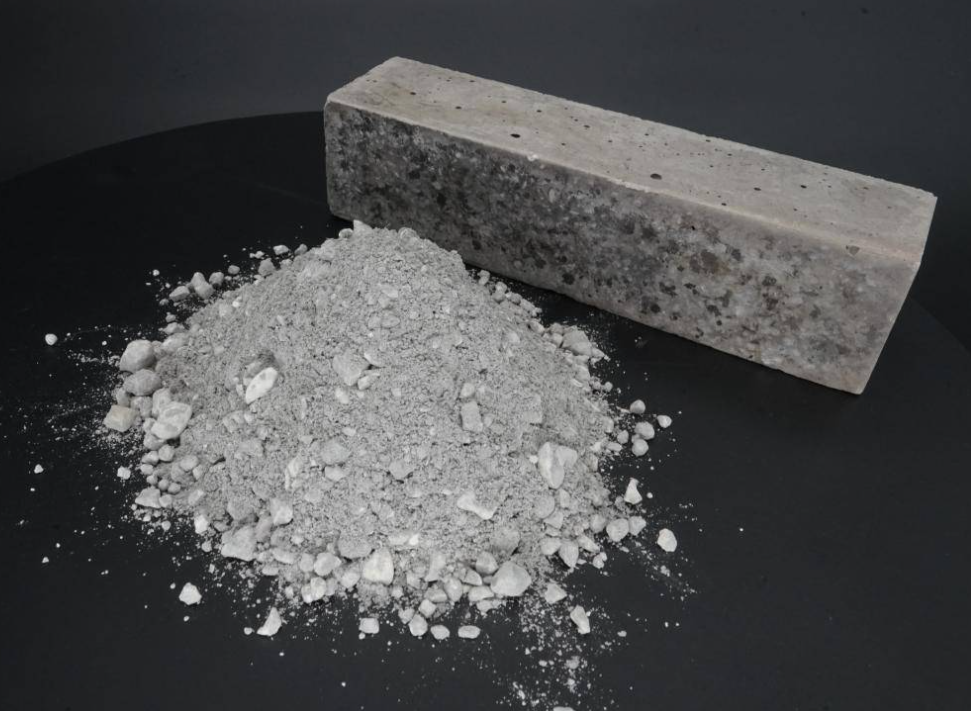
Castables are fluid slurry mixed with refractory aggregates, refractory powders, binders and admixtures in scientific proportions by adding water or special liquid. Without pre-firing, they can be directly formed on construction sites through pouring, vibration, tamping and other processes. After curing and baking, they solidify into an integral structure with high strength and temperature resistance.


Simply put, castables are the "industrial concrete" for high-temperature environments, yet with far superior performance. Ordinary concrete can only withstand 200-300℃, while castables stably resist temperatures up to 1500-2000℃ or even higher. Meanwhile, they feature excellent wear resistance, corrosion resistance and thermal shock resistance, perfectly adapting to various special-shaped kiln structures.


In terms of composition: refractory aggregates (such as bauxite, corundum and silicon carbide) form the structural framework and determine high-temperature resistance and wear resistance; refractory powders fill gaps to enhance density; binders (calcium aluminate cement, water glass, etc.) ensure hardening at room temperature and structural strength under high heat; admixtures optimize fluidity and construction performance.


II. Core Functions: Four Major Advantages to Solve Industrial Pain Points


The core purposes of castables are protecting high-temperature equipment, extending kiln service life, cutting energy consumption and ensuring production safety. Their values are reflected in four key aspects:


High-Temperature Resistance: Against Intense Heat Erosion

This is the most fundamental function of castables. Industrial kilns (blast furnaces, cement rotary kilns, glass melting furnaces, etc.) operate steadily at 1000-2000℃ all year round. Most furnace shells are made of steel, which softens and deforms above 500℃. As the inner lining, castables are in direct contact with high-temperature flames and materials, isolating heat transmission and stabilizing the overall structure of furnace shells to prevent equipment damage.


Erosion & Abrasion Resistance: Withstand Molten Media Corrosion

The scouring of molten steel and slag above 1600℃ in iron and steel smelting, corrosion of acid-base media in chemical production, and abrasion of flue gas and ash in waste incinerators are the main causes of equipment aging. High-grade castables (corundum-based, silicon carbide-based) effectively resist molten metal penetration, slag erosion and material abrasion, reducing lining peeling and lowering maintenance frequency.


Thermal Insulation: Reduce Energy Consumption & Improve Efficiency

Besides fire resistance, castables can also be used as thermal insulation layers. Uniform internal pores reduce heat loss and cut operation costs. Data shows that kilns equipped with high-performance insulating castables can increase thermal efficiency by 15%-20%, bringing long-term energy-saving benefits.


Flexible Construction: Adapt to Special Shapes & Rapid Maintenance

Compared with shaped refractory bricks, castables feature outstanding fluidity and arbitrary shaping capacity, perfectly fitting special-shaped structures such as holes, pipelines and burners without customized molds. The convenient on-site construction supports rapid kiln rush repairs and quick resumption of production, minimizing economic losses caused by shutdowns.


III. Main Application Scenarios: Widely Used in High-Temperature Industries

Castables cover almost all high-temperature industries. Customized formulas are adopted to match different working conditions:


  • Metallurgy Industry (Core Application): Inner lining of blast furnaces, furnace mouths and tapping holes of converters and electric furnaces, working layers of ladles and continuous casting tundishes, resisting erosion of 1600℃+ molten steel and slag.


  • Building Materials Industry: Lining of cement rotary kiln inlets and coolers, regenerators of glass furnaces and tops of ceramic kilns, enduring continuous high temperature and material wear.


  • Chemical & Power Industry: Inner lining of cracking furnaces and gasifiers, furnace chambers of circulating fluidized bed boilers and waste incinerators, adapting to high temperature, high pressure and corrosive media.


  • Non-Ferrous Metal & Environmental Protection Industry: Smelting furnace lining for copper, aluminum and lead, as well as high-temperature components of hazardous waste incineration and flue gas treatment systems, coping with severe corrosion and drastic temperature changes.


IV. Conclusion: The Unsung Hero of High-Temperature Industry

From large-scale iron and steel smelting furnaces and cement rotary kilns to chemical reactors and waste treatment incinerators, castables are hidden inside industrial equipment, enduring continuous high temperature, corrosion and abrasion. With flexible construction performance and stable high-temperature resistance, they build long-lasting protective barriers.


Though not directly involved in product manufacturing, castables determine the service life, operating efficiency and safety of high-temperature equipment, earning them the title of the unsung hero of modern industry. Driven by industrial upgrading and environmental policies, castables are constantly optimized toward high performance, low energy consumption, long service life and eco-friendliness, offering reliable protection for sustainable high-temperature production.


Zibo Shuangjian Refractory Co., Ltd.

One-stop supply of refractory castables and wear-resistant refractory materials, supporting engineering construction services.
Spot goods available, customized solutions provided.
Welcome for inquiries and cooperation.
Phone: +86 18369999108 | Tel: 0533-5780389


  • Company name:

    Zibo Shuangjian Refractory Co., Ltd.

  • Hotline:

    0533-5780389 +8618369999108

  • Company address:

    East Xilishan Village, Kunlun Town, Zichuan District, Zibo City, Shandong Province, P.R.China

  • E-mail address:

    server@refrcn.com

Code

Copyright © 2012-2026 Zibo Shuangjian Refractory Co., Ltd. All rights reserved  sitemap.xml

Phone:+86013355270981 +8618369999108

We use cookie to improve your online experience. By continuing to browse this website, you agree to our use of cookie.

Cookies

Please read our Terms and Conditions and this Policy before accessing or using our Services. If you cannot agree with this Policy or the Terms and Conditions, please do not access or use our Services. If you are located in a jurisdiction outside the European Economic Area, by using our Services, you accept the Terms and Conditions and accept our privacy practices described in this Policy.
We may modify this Policy at any time, without prior notice, and changes may apply to any Personal Information we already hold about you, as well as any new Personal Information collected after the Policy is modified. If we make changes, we will notify you by revising the date at the top of this Policy. We will provide you with advanced notice if we make any material changes to how we collect, use or disclose your Personal Information that impact your rights under this Policy. If you are located in a jurisdiction other than the European Economic Area, the United Kingdom or Switzerland (collectively “European Countries”), your continued access or use of our Services after receiving the notice of changes, constitutes your acknowledgement that you accept the updated Policy. In addition, we may provide you with real time disclosures or additional information about the Personal Information handling practices of specific parts of our Services. Such notices may supplement this Policy or provide you with additional choices about how we process your Personal Information.


Cookies

Cookies are small text files stored on your device when you access most Websites on the internet or open certain emails. Among other things, Cookies allow a Website to recognize your device and remember if you've been to the Website before. Examples of information collected by Cookies include your browser type and the address of the Website from which you arrived at our Website as well as IP address and clickstream behavior (that is the pages you view and the links you click).We use the term cookie to refer to Cookies and technologies that perform a similar function to Cookies (e.g., tags, pixels, web beacons, etc.). Cookies can be read by the originating Website on each subsequent visit and by any other Website that recognizes the cookie. The Website uses Cookies in order to make the Website easier to use, to support a better user experience, including the provision of information and functionality to you, as well as to provide us with information about how the Website is used so that we can make sure it is as up to date, relevant, and error free as we can. Cookies on the Website We use Cookies to personalize your experience when you visit the Site, uniquely identify your computer for security purposes, and enable us and our third-party service providers to serve ads on our behalf across the internet.

We classify Cookies in the following categories:
 ●  Strictly Necessary Cookies
 ●  Performance Cookies
 ●  Functional Cookies
 ●  Targeting Cookies


Cookie List
A cookie is a small piece of data (text file) that a website – when visited by a user – asks your browser to store on your device in order to remember information about you, such as your language preference or login information. Those cookies are set by us and called first-party cookies. We also use third-party cookies – which are cookies from a domain different than the domain of the website you are visiting – for our advertising and marketing efforts. More specifically, we use cookies and other tracking technologies for the following purposes:

Strictly Necessary Cookies
These cookies are necessary for the website to function and cannot be switched off in our systems. They are usually only set in response to actions made by you which amount to a request for services, such as setting your privacy preferences, logging in or filling in forms. You can set your browser to block or alert you about these cookies, but some parts of the site will not then work. These cookies do not store any personally identifiable information.

Functional Cookies
These cookies enable the website to provide enhanced functionality and personalisation. They may be set by us or by third party providers whose services we have added to our pages. If you do not allow these cookies then some or all of these services may not function properly.

Performance Cookies
These cookies allow us to count visits and traffic sources so we can measure and improve the performance of our site. They help us to know which pages are the most and least popular and see how visitors move around the site. All information these cookies collect is aggregated and therefore anonymous. If you do not allow these cookies we will not know when you have visited our site, and will not be able to monitor its performance.

Targeting Cookies
These cookies may be set through our site by our advertising partners. They may be used by those companies to build a profile of your interests and show you relevant adverts on other sites. They do not store directly personal information, but are based on uniquely identifying your browser and internet device. If you do not allow these cookies, you will experience less targeted advertising.

How To Turn Off Cookies
You can choose to restrict or block Cookies through your browser settings at any time. Please note that certain Cookies may be set as soon as you visit the Website, but you can remove them using your browser settings. However, please be aware that restricting or blocking Cookies set on the Website may impact the functionality or performance of the Website or prevent you from using certain services provided through the Website. It will also affect our ability to update the Website to cater for user preferences and improve performance. Cookies within Mobile Applications

We only use Strictly Necessary Cookies on our mobile applications. These Cookies are critical to the functionality of our applications, so if you block or delete these Cookies you may not be able to use the application. These Cookies are not shared with any other application on your mobile device. We never use the Cookies from the mobile application to store personal information about you.

If you have questions or concerns regarding any information in this Privacy Policy, please contact us by email at . You can also contact us via our customer service at our Site.